TA6000

Integrated system

TA6000.

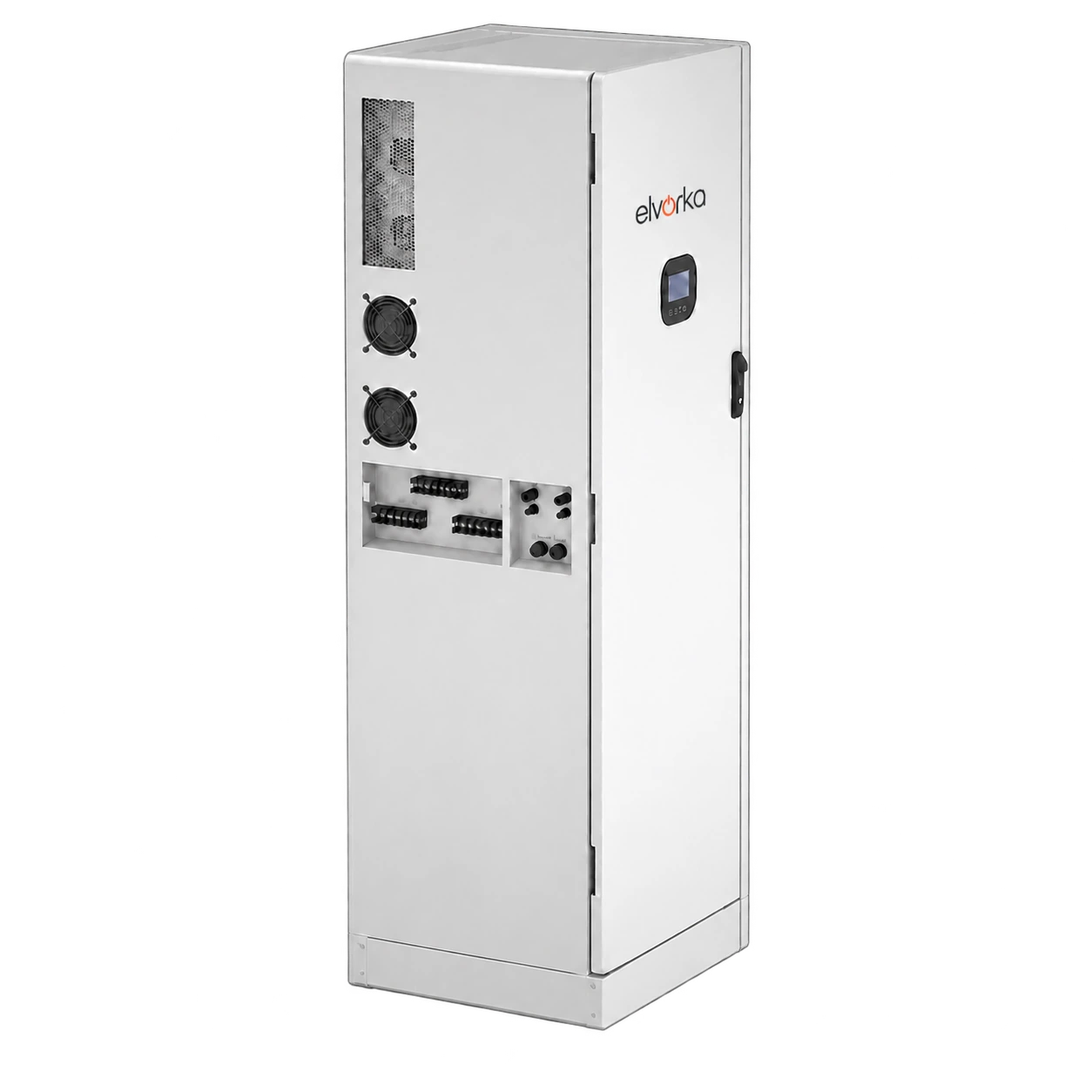
Battery and inverter in one cabinet, with PV input connectivity and three specified storage configurations. AC output options depend on the selected configuration.

INVERTER
Included
ENCLOSURE
Not specified
NOMINAL ENERGY
10.24–20.48 kWh
AC CONFIGURATION
120 V US / 230 V EU AC options
Start your project ↗

Specifications

Model / configurationEnergy (kWh)AC options (kW)
TA6000-M210.246–10
TA6000-M315.366–12
TA6000-M420.486–12

Specify the correct market AC voltage and 50 / 60 Hz option. PV input: 11 kW for M2; 11–13.2 kW for M3/M4. No three-phase or split-phase capability is claimed.

ModelDimensions (mm)Approx. kg
TA6000-M2590 × 570 × 1880 / W × D × H244
TA6000-M3590 × 570 × 1880 / W × D × H286
TA6000-M4590 × 570 × 1880 / W × D × H328

Communication: RS485 / RS232 / CAN / Wi-Fi; Bluetooth optional
Temperature: Operating −20 to 60 °C

Battery storage for tropical homes.

Keep evening essentials and home-office equipment in your backup plan. From an enclosed terrace-house utility room to a protected coastal service space, choose the storage format around your home, its heat and moisture exposure, and the inverter you use.

Temperature:
Operating −20 to 60 °C
ENCLOSURE
Not specified
01

Dry terrace-house utility room

For a new system in a dry enclosed room beside the car porch, one cabinet brings the battery and inverter together and keeps the equipment layout straightforward.

EU 230 V offers integrated battery storage with 6.2 or 12 kW rated AC configurations and an IP21 housing. Allow the model-specific cooling and service space, and select the configuration around your essential circuits.

What is the hottest expected temperature inside this room?
  • Are the vents and service sides clear of parked vehicles, cupboards and stored items?
02

Protected storage for a coastal home

A sheltered equipment space gives coastal homes a place to organise storage and its connections. METMalaysia identifies stronger northeast-monsoon rain exposure in eastern Peninsular Malaysia, western Sarawak and northeastern Sabah.

Compare the compact TR Pro battery and the expandable HP Ultra stack, both listed with IP66 enclosures. Use the room and enclosure together in the design; rain, condensation and coastal exposure still need model-specific review.

Can wind-driven rain, wash water or standing water reach this location?
  • Is the site exposed to coastal air or condensation, and what protection does the exact model require?
03

Existing inverter in a compact service area

Add energy capacity while retaining an existing inverter where compatibility is established. Wall-mounted and modular formats give different ways to use a dedicated service area.

TR Pro is a 51.2 V battery family; HP Ultra is high voltage. Match the inverter's battery-voltage window, CAN/RS485 support and charge/discharge settings. Do not substitute a high-voltage stack for a low-voltage battery connection.

What are the inverter make, model and supported battery-voltage range?
  • Is there room for the battery, mechanical fixing and separate protected power/communication routes?

Specifications
  • TR Pro lists charging at 0 to 55 °C and discharging at −20 to 60 °C. EU 230 V lists charging at 0 to 55 °C and discharging at −20 to 55 °C. Check room temperature and any model-specific derating; do not assume constant output across the entire range.
  • IP66 on TR Pro/HP Ultra is not a blanket approval for any outdoor position. TR standard and HP K list IP20 with IP54 optional, TB rack lists IP20, and EU lists IP21. Verify the exact housing option and installation manual.
  • Use kWh to plan duration and kW to check the load. If air-conditioning or a pump is required, provide its actual running and starting requirements rather than adding it to a basic preset without review.

PRODUCT DETAIL / ORIGINAL LITERATURE

Every side. Every connection.

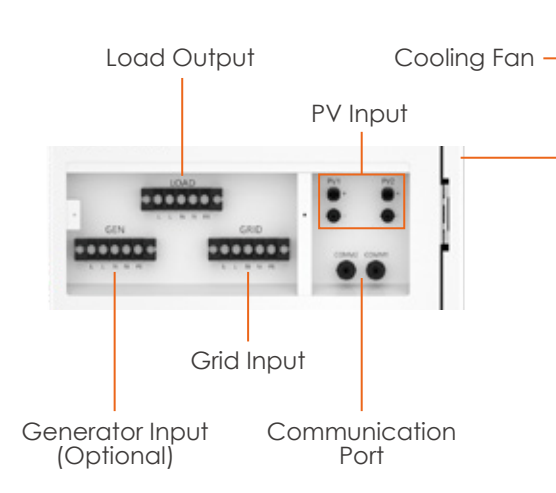
The supplied brochure provides two labelled connection/breaker insets and internal cabinet/cell illustrations on printed pages 15-16. Crops avoid visible product logos without AI editing, repainting, or invented structure. Embedded views not visibly matched to the printed product page were excluded. These views do not establish pinouts, cable sizes, commissioning steps or installation compatibility.

Original terminal labels
Original terminal labelsConnection panel labelled for load, grid, optional generator, PV and communication.
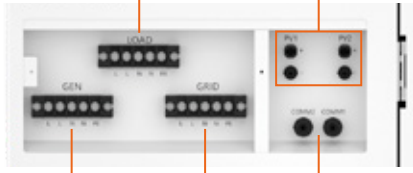
Terminal panel close-up
Terminal panel close-upClose-up of the cabinet terminal panel.
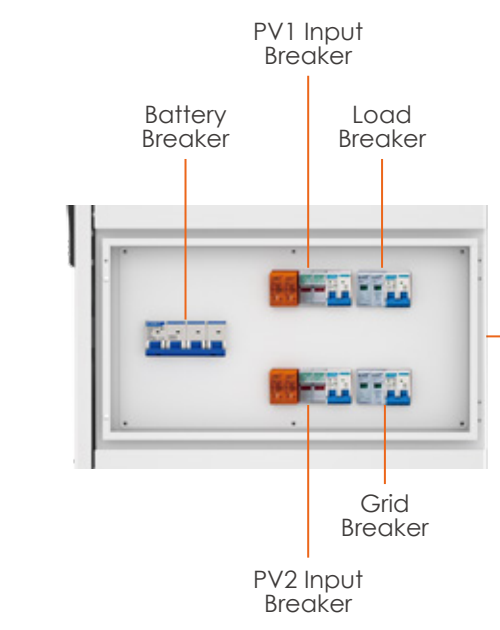
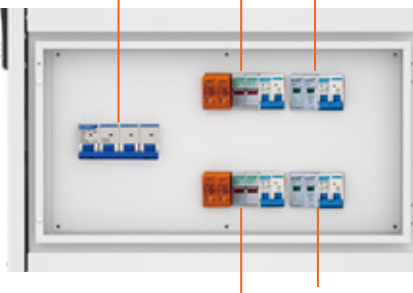
Original breaker labels
Original breaker labelsBattery, PV1, PV2, load and grid breakers in the illustrated compartment.
Breaker compartment close-up
Breaker compartment close-upCircuit breakers within the cabinet's breaker compartment.
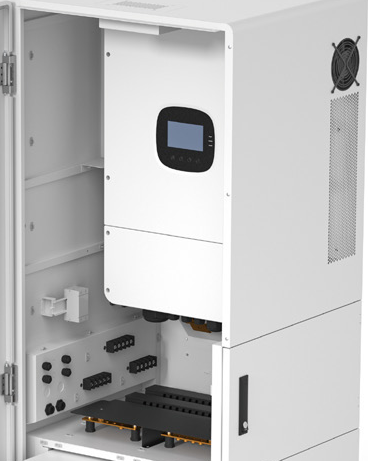
Upper cabinet and service bay
Upper cabinet and service bayUpper cabinet compartment with the inverter and connection area.
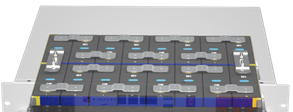
Cell assembly detail
Cell assembly detailBattery cell tops in a partial internal illustration.

Know your interfaces.

Power connections

Load Output
Output position identified as Load Output in the brochure.
Grid Input
Connection position identified as Grid Input.
Generator Input (optional)
The generator input is explicitly marked optional in the original callout.
PV Input
PV connection area identified by the original callout.
PV1 Input Breaker
Breaker identified for PV1 Input.
PV2 Input Breaker
Breaker identified for PV2 Input.

Communication

Communication Port
Connection area labelled Communication Port. No protocol pin assignments are specified in this component view.

Controls & indicators

Battery Breaker
Breaker labelled for the battery section.
Load Breaker
Breaker identified for the load connection.
Grid Breaker
Breaker identified for the grid connection.

Source: Residential ESS brochure · PDF page 8 · printed pages 15-16